
I’m continuing my catch-up posts with this entry about another trip to the Olorgesailie Prehistoric site. If you haven’t yet, you might want to read the one about my first trip there last year first.
Then I went again for a second time, with my son, in March this year, but didn’t post about it. At the end of that night, I shot a good two hours worth of exposure of the Carina Nebula, but haven’t gotten around to process that data yet. Hopefully I’ll manage sometime soon.
So this time around was the third time for me. We went with a group of people from the Space Society, and Maryanne, a friend from church, 19th to 21st September, i.e. just before New Moon — which of course wasn’t by accident.
The first night was awesome, very clear, and beginning with the brightest and best view of the central Milky Way that I’ve seen yet, I think, almost directly overhead. We looked at so many objects during that night, and there was little sleep until the morning.
This was our observation plan:
- 8pm: Sagittarius, Scorpius, central Milky Way and its many clusters/nebulae
- Midnight: Tucana (47 Tuc, SMC), Sculptor galaxies (Sculptor, String of Pearls, Giant Squid, Sculptor Pinwheel); if it’s too hazy/lightly cloudy, there’s Saturn.
- 1am: Andromeda, Triangulum galaxies
- 4am: Dorado (LMC), Orion (nebula), various other galaxies, globulars and/or planetary nebulae
- 5:08:am Moonrise, very slim sickle near Venus, should look pretty cool in the morning twilight.
We looked at all of those, except for planetary nebulae, which we just didn’t get around to.
Usually, when going to dark sites like this, one mainly goes there for looking at Deep Sky Objects (DSOs), because those are faint and not very well visible from light-polluted areas in or around cities. But planets are very bright, so it’s not a problem to observe them from any location, given good atmospheric conditions. That’s why I had suggested to look at Saturn only when it would be lightly cloudy or hazy, because that would have obscured the view of DSOs, while bright Saturn might still be well visible in such conditions.
But despite the night being very clear and not cloudy or hazy at all, we still looked at Saturn. Because some among us had never seen it before through a telescope, and so how could we not look at it then?
Shuffling between different objects using 2 telescopes, 2 pairs of binoculars, and for a good while just staring at the scene with our bare eyes, the whole night went by pretty quickly. And I was so engrossed in the scene that I didn’t want to risk loosing many minutes observation time by taking pictures. While I use a red colour filter (accessibility mode) on my phone and dim the screen to the lowest setting, staring at it for minutes to set up the phone for shooting still hampers dark adaptation. Not to mention that this is usually a too-dim setting to see dimmer targets in the AstroShader app, which requires zooming in on stars to check and fine-tune focus, and to track the object of interest as it moves through the field of view when not using a tracking mount.
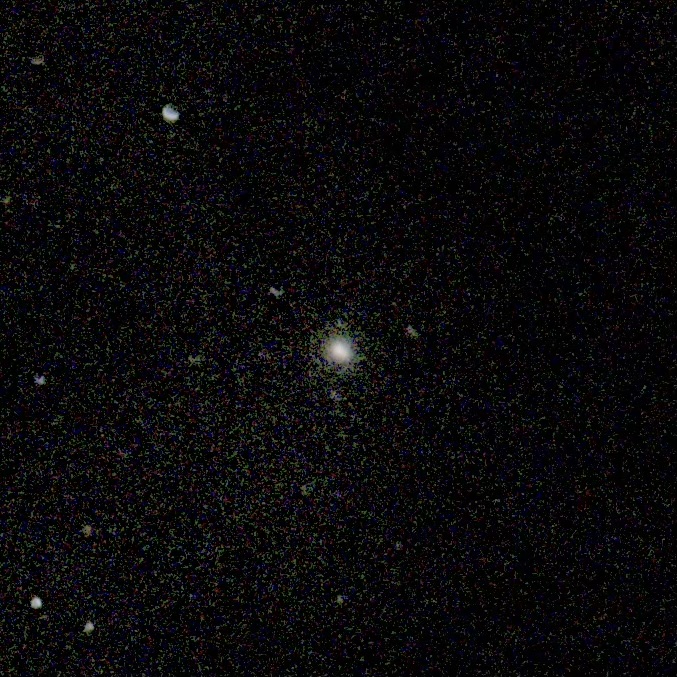
Only towards the morning, when we were looking at the Small and Large Magellanic Clouds (SMC and LMC), and the showcase globular cluster 47 Tucanae — one of the apparently brightest and biggest, and in many people’s opinion most beautiful of globulars — did I try to at least get a phone pic of the SMC + 47 Tuc through binoculars. Unfortunately though, I couldn’t get the to align very well, because there are no bright stars in that scene that would allow for this; and the binoculars themselves were on a static tripod and not tracked.
So I only managed to take this very (far too) short stacked image of 47 Tuc, which hardly does justice to its actual beauty, but at least it evokes memories:
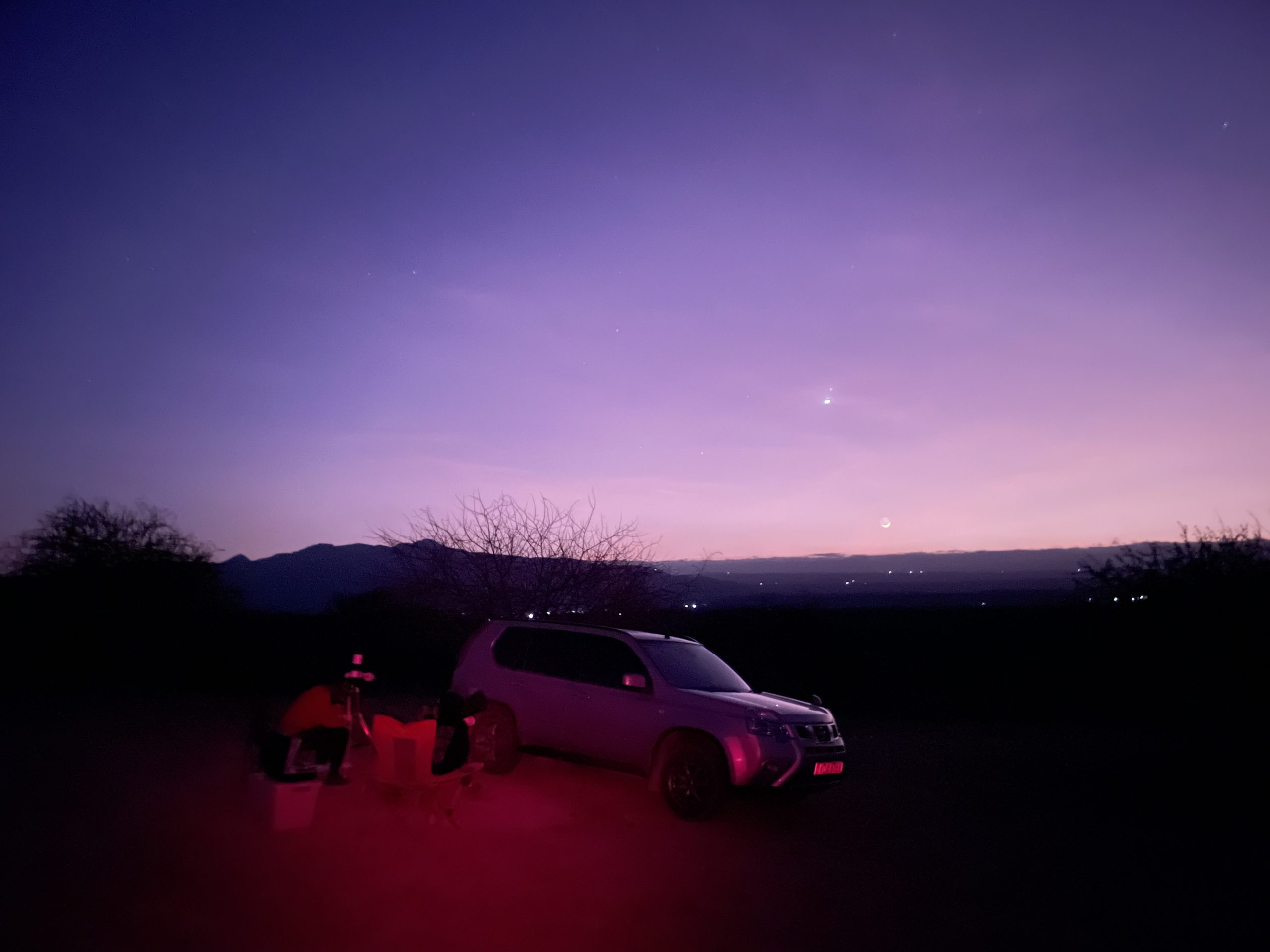
Later on, in the beginning morning twilight, Venus and a very nice crescent Moon with Earthshine rose, with bright Regulus just on top of Venus.
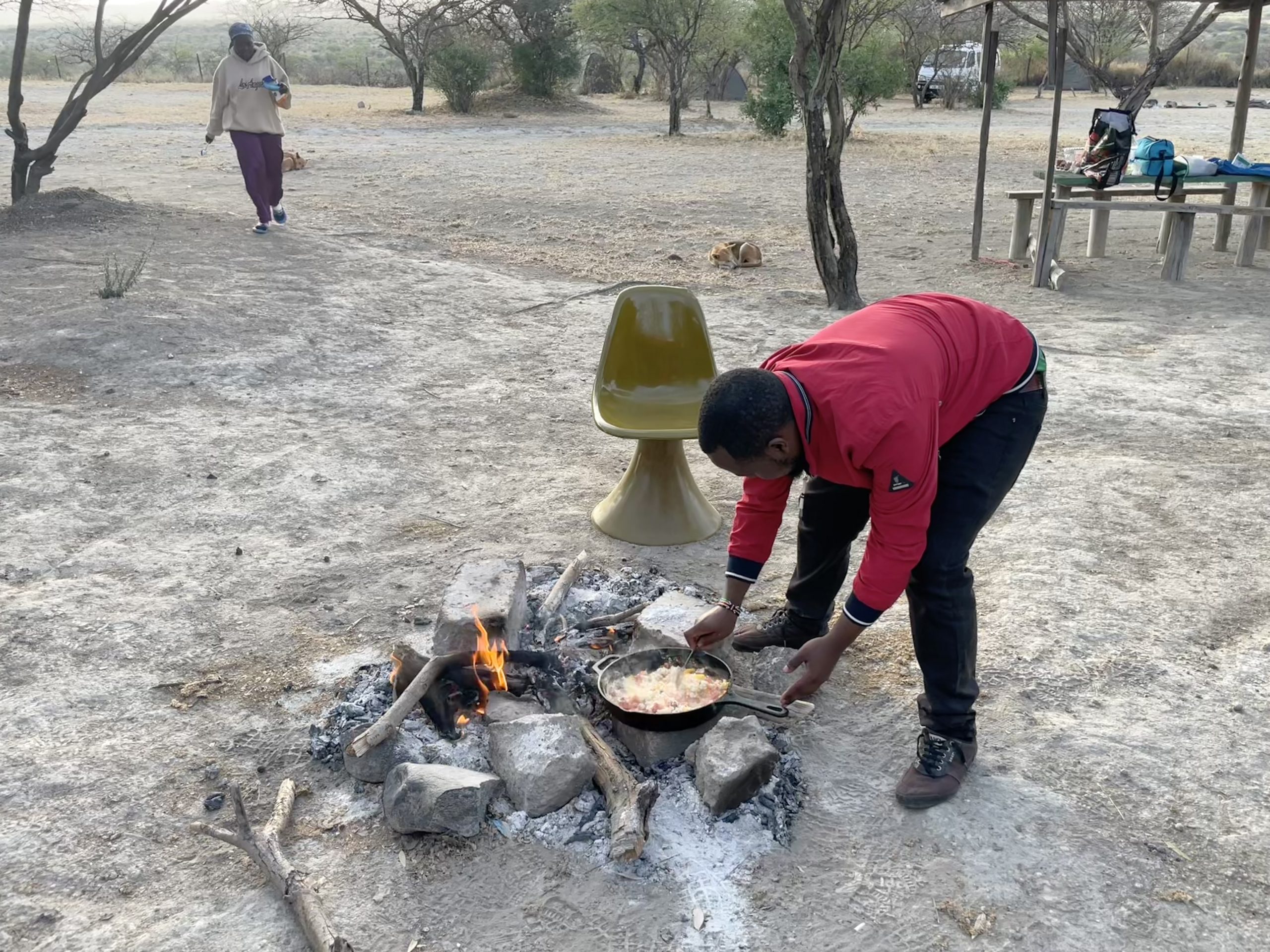
Next morning, we cooked our breakfast on a bonfire like true campers (though I stayed in a Banda this time), before resting some more after the rather short night.

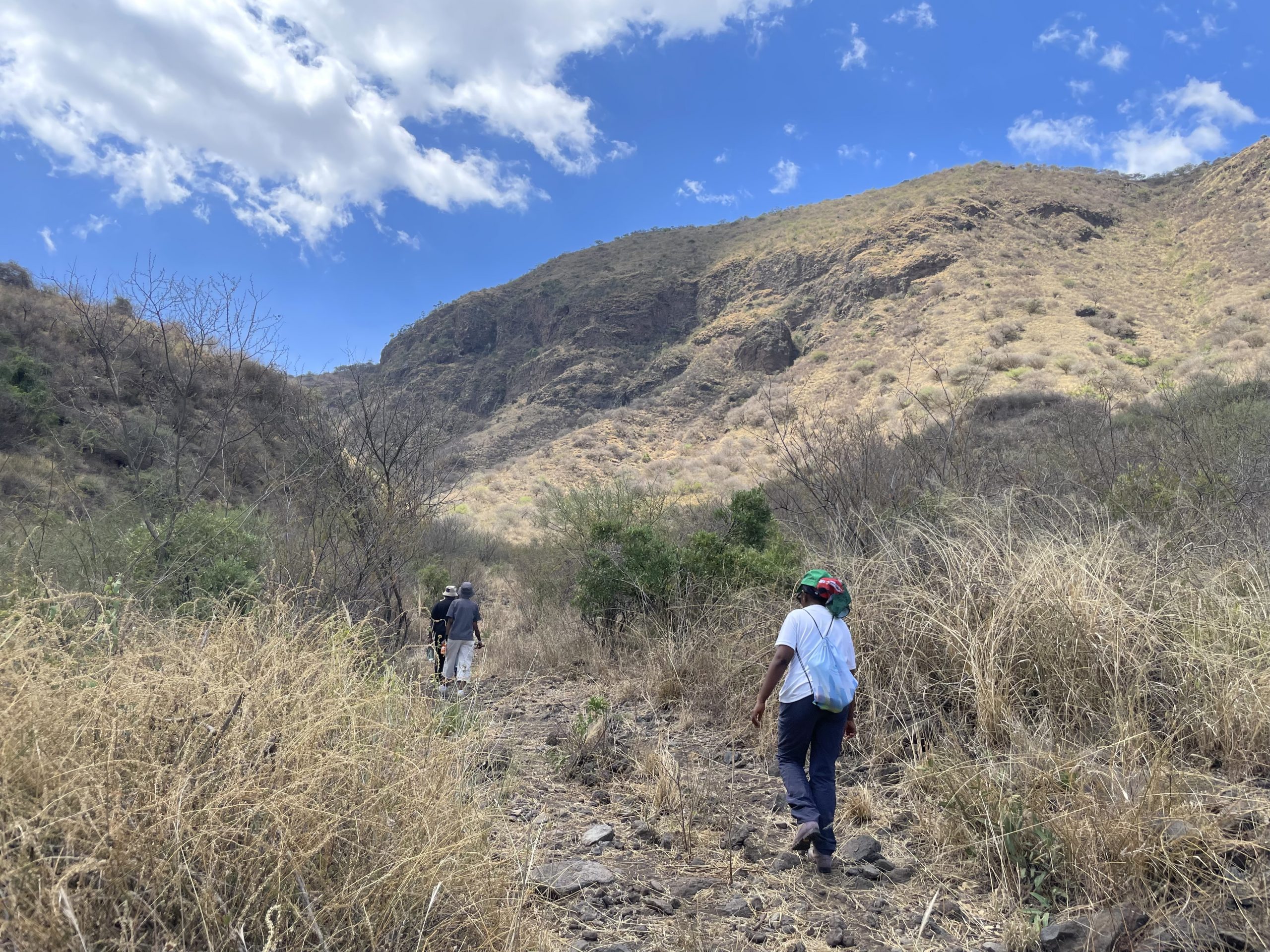
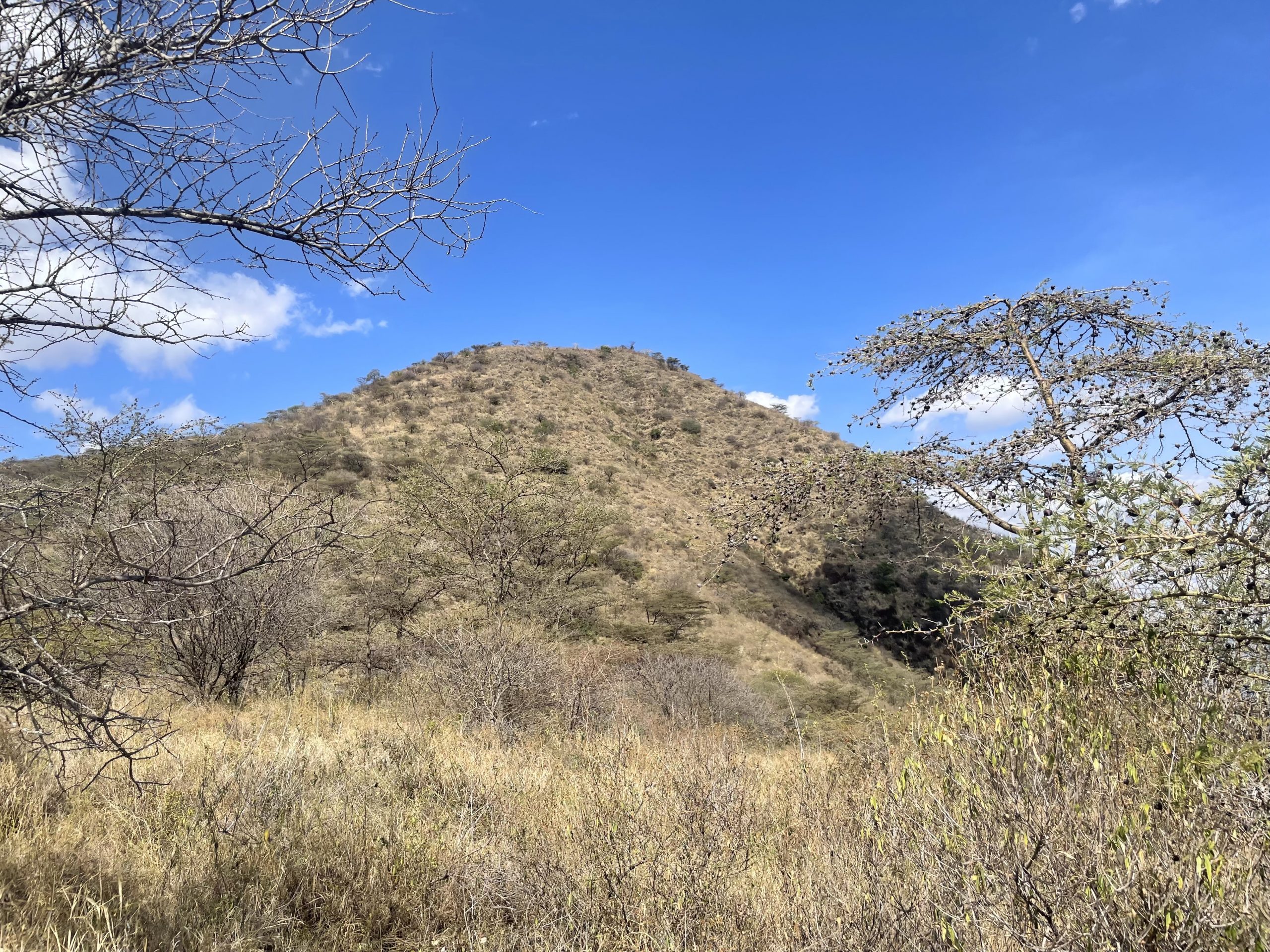
Then Maryanne joined us at mid-day, and we went off to hike to the summit of Mt. Olorgesailie (1,760m). Since we started rather late, we tried to save some time by driving some way towards the mountain before beginning the hike. But our guide let us half-way around the mountain on some very bumpy roads, so in the end, we didn’t save any time at all, and just added a mostly annoying drive of about 1.5 hours each way. In addition, both the conservancy manager and our guide charged different members of our group for the conservancy fee for the entire group, so we double-paid. And they’re yet to send it back. So that part was (and is) a rather annoying experience. So if you ever go on this hike, beware these caveats, and make sure that your whole group is informed at all times who paid what!
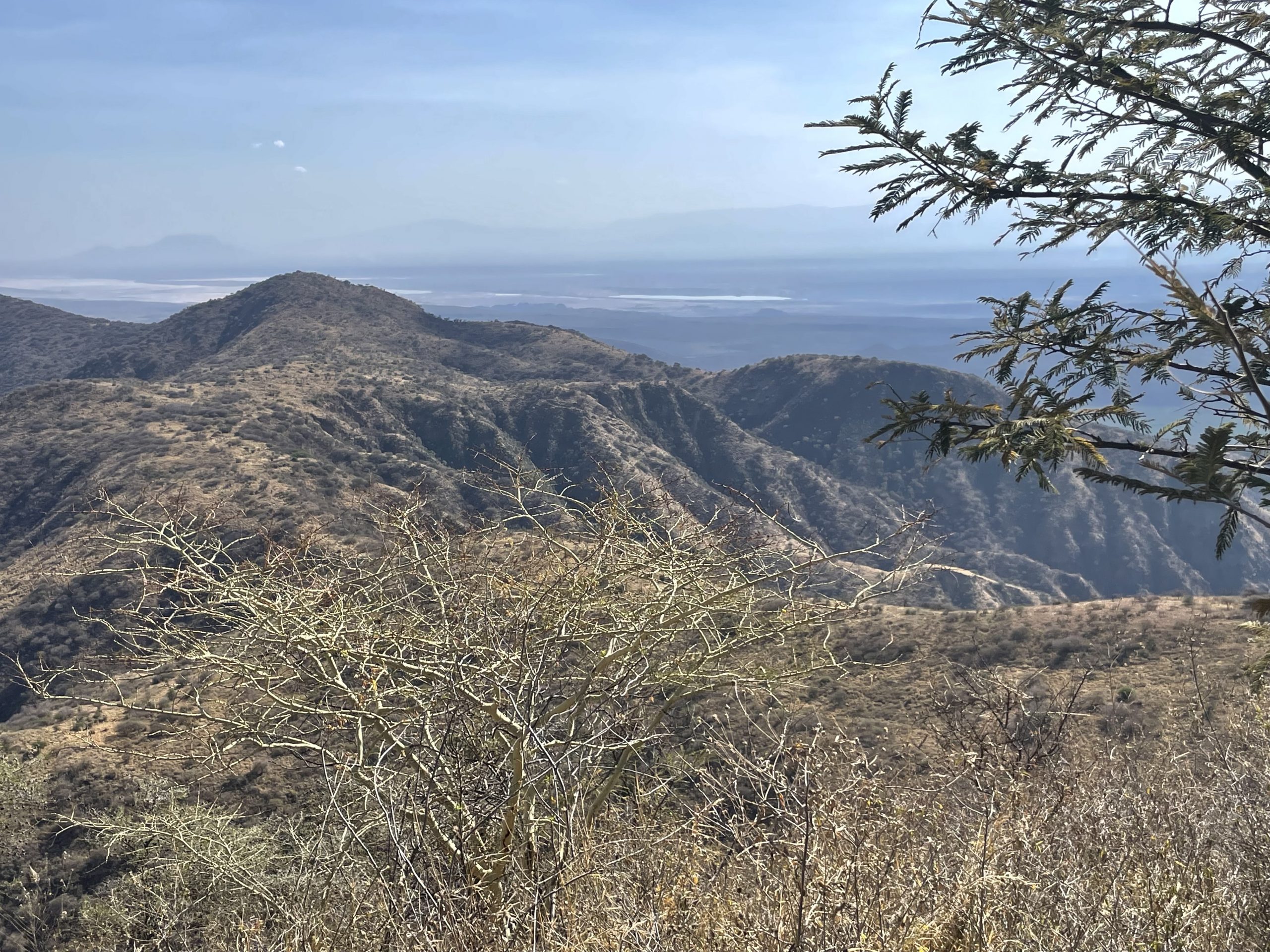
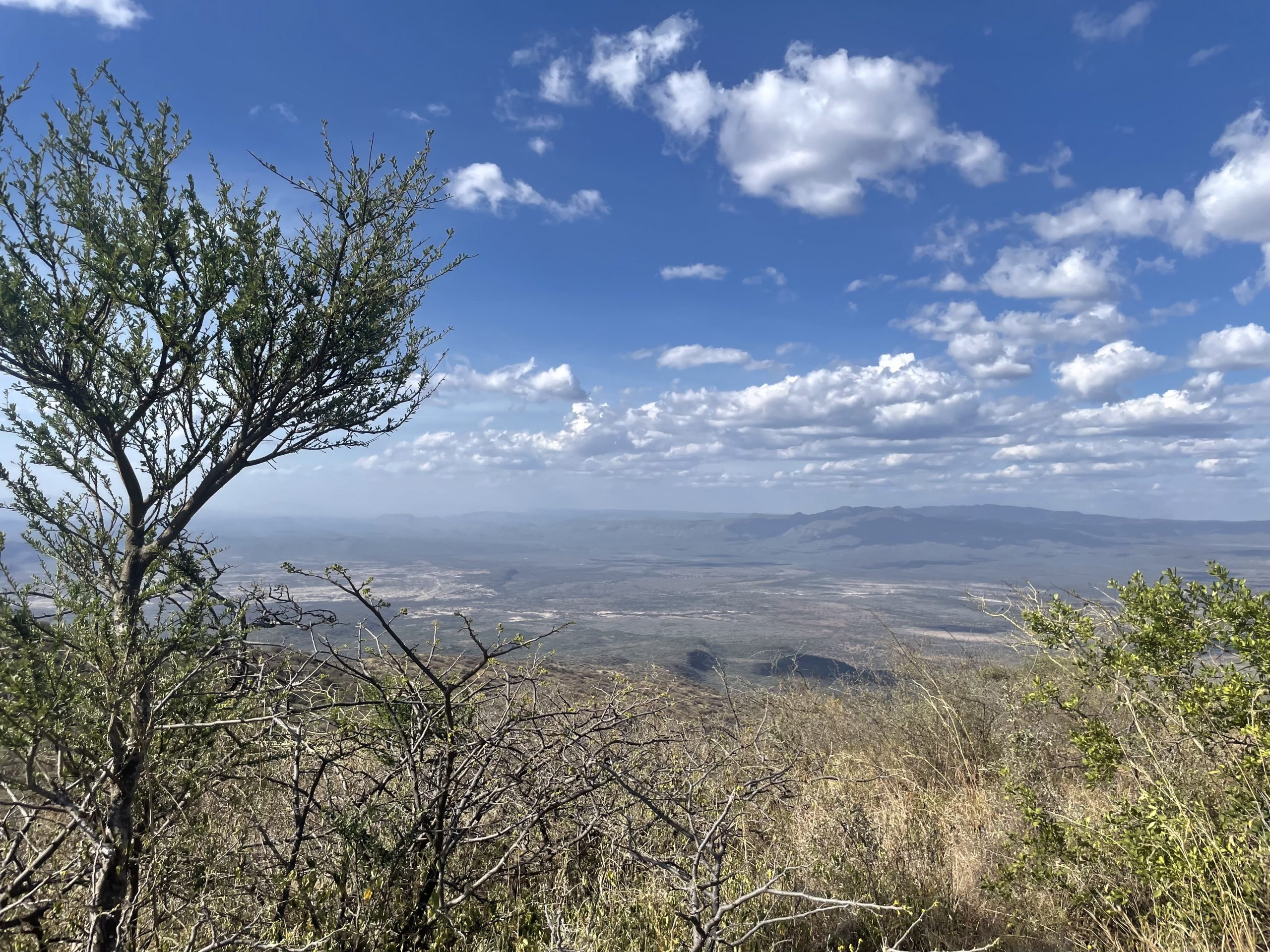
The hike itself however was through some beautiful landscapes, coming up through an inner valley on the mountain. It was quite steep and of medium difficulty. The less experienced members of our group were a bit challenged, but managed ok. And the views along the way and from the top were all worth it. We also saw Leopard footprints, but no actual Leopard (which are very elusive creatures — I’ve yet to see one in the wild).
“It is the glory of God to conceal a matter; to search out a matter is the glory of kings.“
(or queens, editor’s note)
Proverbs 25:2 (NIV)
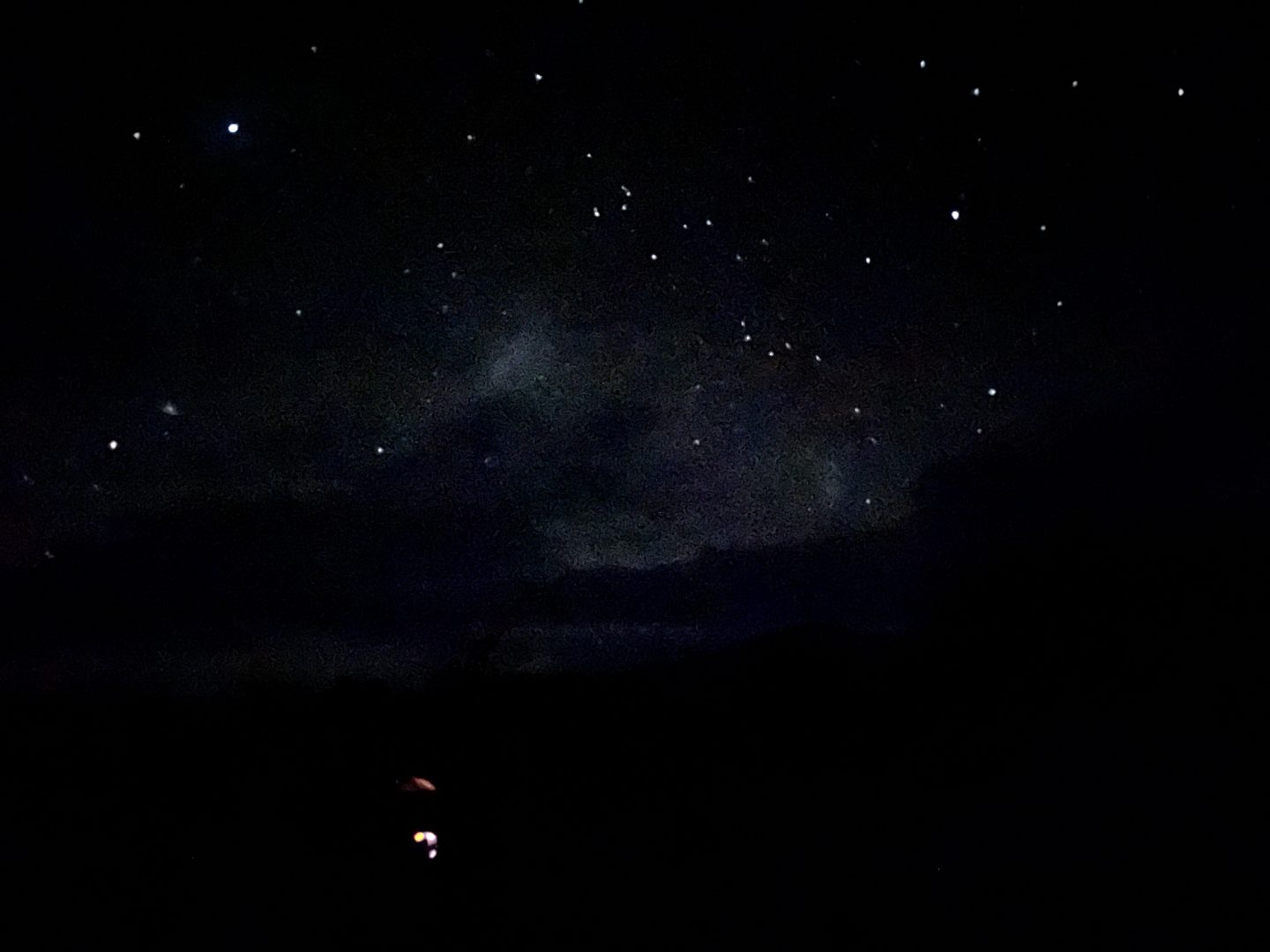
After this, we didn’t last very long stargazing that night. But it was also a bit cloudy, so we didn’t miss all that much. However, a few of us got up again at around 4am, when the Magellanic Clouds were hovering just above some “normal” clouds near the Southern horizon. I took a pic, but only with the normal phone photo app, because the moments when they were visible were too fleeting to set up and shoot with the AstroShader app. So it’s a bit blurry, but hopefully you can get an idea:
The sky towards the North was clearer, so I shot this sky panorama over my Banda:
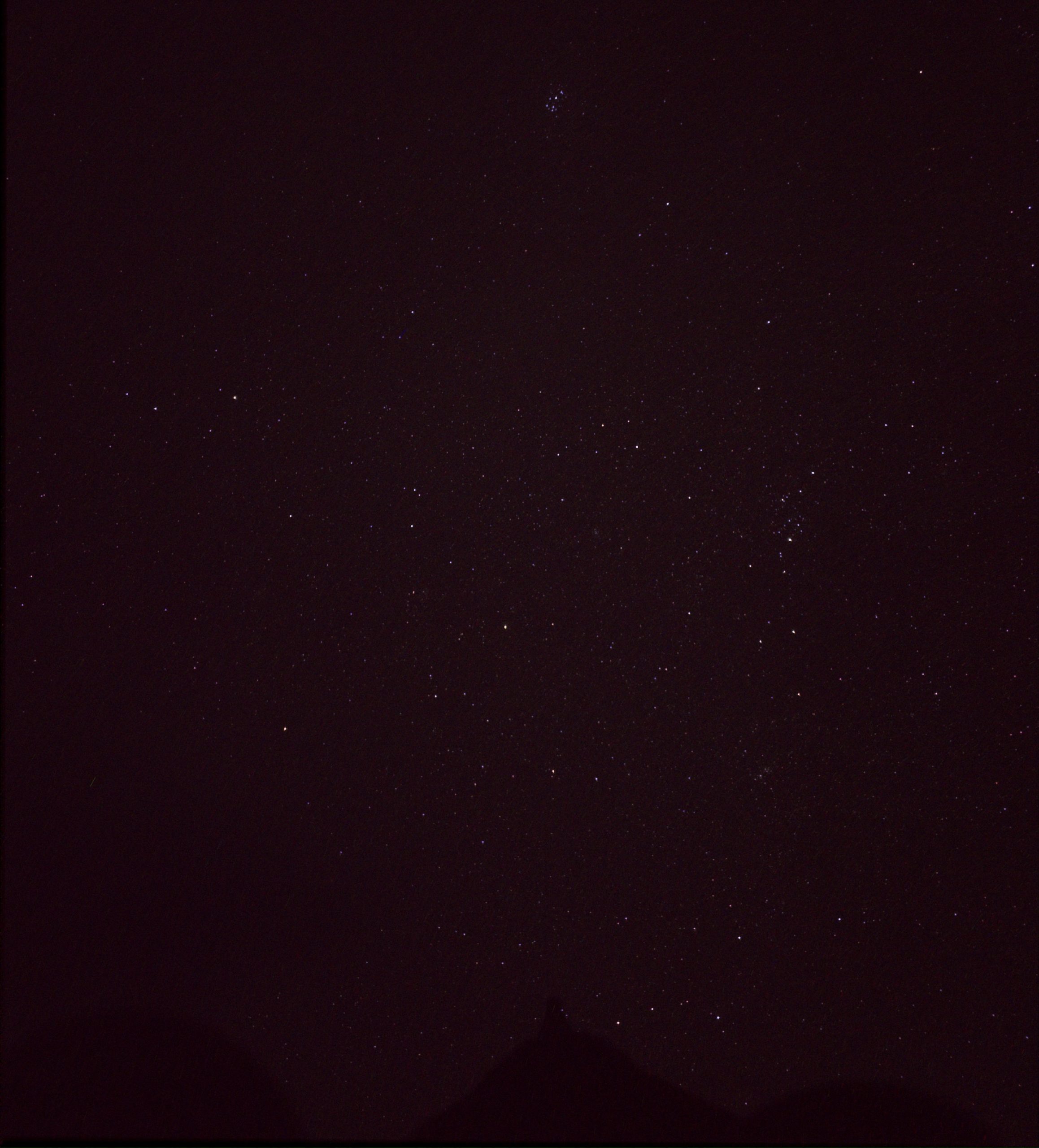
AstroShader app, 120 x 1 second sub-exposures.
To conclude, we had great fun overall, and I’ll certainly return to Olorgesailie sometime soon. In the meantime, however, I used the long weekend last week (18th to 20th October) to check out an even darker site, much farther away though — Eliye Springs at Lake Turkana. But that’s a topic for another post.
Until then, clear skies.
- Technically, “Nyama Choma” simply means “meat grilled”. However, if not further specified, such as “Kuku Choma” = “chicken grilled”, it usually refers to grilled goat meat (“Mbuzi Choma”). Urban variants allow to just order a plate, but the more traditional way is to choose the part of goat yourself, or even choose a whole (yet living) specimen to consume with a large-enough group of family and/or friends, including everything the animal has to offer. The slaughtering, grilling, eating, socialising, drinking, etc. easily can take almost a whole day. ↩︎
This is amazing 🤩, damn hook me up in the next visit
Thank you Joseph. And yes I promise!
Good article, It was a good experience and I was happy to be part of it, looking forward to the next one.
It was a pleasure!
FOMO HITS SO HARD !!!
The sky isn’t changing very much over human time scales, so you can always join the next time 🤩
The Magellanic Clouds are now up earlier in the night, though for the central Milky Way you’ll need to wait a few months.
But of course there’s always lots of other stuff!