

He determines the number of the stars
Psalms 147:4, NIV
and calls them each by name.
Hello and welcome to this new blog. My name is Bastian, and I’ve always been fascinated by space. Until recently, that manifested mostly in my love for science fiction rather than any activities with the real thing.
However, there’s really a lot to see up there in the night sky. After having lived in Kenya for years, it occurred to me that by not regularly looking at it, I’m missing a major opportunity. Because Kenya has some really good dark skies, especially compared to most places e.g. in Europe. Even being on the outskirts of Nairobi (4.8M inhabitants, according to Wikipedia), the sky is still quite ok. Though this is quite rapidly changing as Nairobi is developing rapidly, with more residential housing, and their lights, coming up all around us. But this is another topic, which I might address in a future post.
We’re also living practically on the equator here, which makes almost the whole sky available to us over the course of a year (more on this in a later post).
That made me purchase some binoculars (10×50), and a bit later a telescope (SkyWatcher Heritage 150p, a 6″ Newtonian reflector). I’ve since enjoyed observing solar system as well as deep sky objects from home and other places around Nairobi, but also some truly dark skies from the Western parts of Kenya. Additionally, I got a little bit into astrophotography.
In perfectly dark skies, the human eye can typically see somewhat less than 10,000 stars. With 10×50 binos, that grows to around 100,000. And with a 6″ Newtonian, to around half a million. These numbers aren’t meant to be exact, but rather give some idea of the orders of magnitude. Even so, this is still very little compared to the perhaps 200 billion stars in our Milky Way galaxy, not to speak of all the stars in the estimated 2 trillion galaxies in the observable universe, or even the unknown numbers in the parts of the universe which aren’t observable by us at all, because they’re too far away and moving too fast further away from us for their light to ever reach us (which is due to the expansion of the universe, which I encourage you to learn about elsewhere).
These kinds of numbers are truly impressive, so much so that they’re actually rather incomprehensible. They’re also the reason why the opening Bible verse above is one of my favourites — it describes the grandness of God very effectively.
Anyway, while it might seem that a 6″ telescope can show only a very small fraction of what’s out there, and this being quite true, it can still reveal lots of very interesting things. There are star clusters, nebulae, galaxies, all of various kinds, sizes and shapes. And colours, though apart from brighter stars, they’re mostly only visible in photos.
The main purpose of this blog is to share some of these experiences with interested people: there are local astronomy groups and organisations, both professional and amateur, that I’ve connected with, as well as family, friends, and other interested individuals. Hopefully, it will also inspire more folks to get into this wonderful hobby. Especially in Kenya and the region, which, again, has some truly great skies.
On the overall website, I plan to add other tools to facilitate better resource sharing and collaboration. For instance, a locally focused forum, link collections, etc.
As a family, we’ve also started supporting outreach events such as in schools. There was also a beginner’s astrophotography workshop, emphasising especially the possibilities to get into this challenging but very rewarding activity (art form?) with simple equipment, such as just a phone camera or amateur mirrorless or DSLR camera. Posts on all this, and ongoing activities, will be coming soon, so check back here or register for updates!
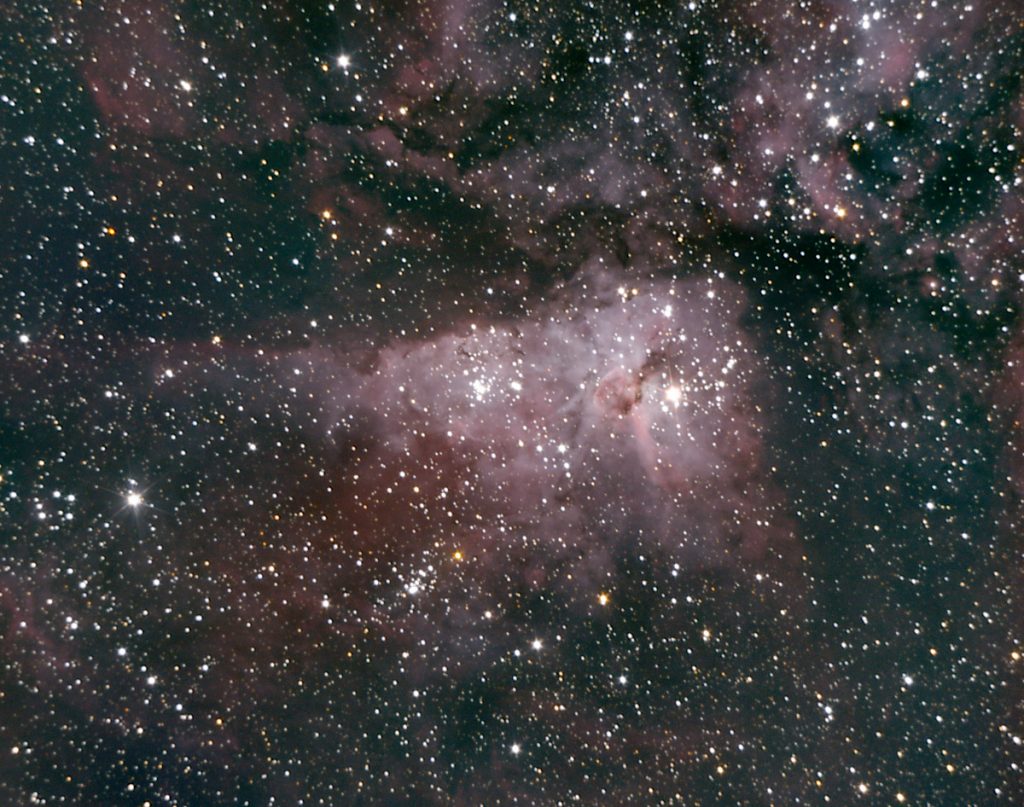
With this, I’ll just post a picture we took at the mentioned workshop of the Carina Nebula, and leave it at that for now.
Clear skies.
Nice start!
Thanks!
Awesome!!!
Soo good Bastian
Thank you Hellen 🙂